Last Temptation
An interview with Wendell Potter
The former mouthpiece for insurance giant Cigna divulges his role in misleading the public, the emotional day that led to his whistle-blowing, and what should really scare you.
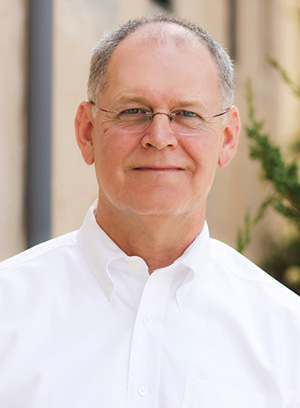 In June 2007, Wendell Potter was head of corporate communications at Cigna, one of the largest health insurance companies in America, when he attended the U.S. premiere of Michael Moore’s Sicko. Potter was part of the team charged with discrediting Moore’s film, which advance word said was highly critical of the health insurance industry. Potter “sat quietly in the back and took notes,” but soon realized he had a problem. “When I saw the movie, I’ll be honest: I thought it was a real good documentary. I knew from my own studies of other healthcare systems that it was an accurate portrayal of those systems and how they are able to provide universal coverage.” Yet he was being paid by Cigna to tell people the opposite, that the film was full of lies.
Just a few weeks later, Potter, who is from Tennessee, read in a local paper about a free healthcare expedition being held in Wise County, Virginia. He decided to check it out. Walking through the fairground gates, Potter saw hundreds of people waiting in the rain while physicians attended to patients in animal stalls or on gurneys lying on the rain-soaked pavement. Tents had been pitched across the fairground lawns, creating a scene “like something that could’ve been happening on a battlefield or in a war-torn country.” Tears mixed with the rain to cloud Potter’s vision. “What I thought was: ‘Is this the United States?’ It was so remote from my reality. It just seemed impossible.”
In months and years prior, Potter had grown increasingly skeptical about his job as chief spokesman for Cigna. Though he insists he never intentionally lied to a reporter, he began to spout what he thought were either misleading or less than honest statements. Moreover, his job required him to hype new programs he felt were not in the best interest of patients or the U.S. healthcare system—particularly when it came to high-deductible, or “consumer driven” plans. He came to feel he was on the wrong side of the healthcare debate and would catch himself gazing into a mirror, wondering, “Who is this? How did this happen to me?” After Sicko and Wise County, he resigned.
Since then, Potter has become an outspoken advocate for healthcare reform. Why reform? Because of statistics like these: The U.S. healthcare system is the most expensive in the world, with each person spending more than twice as much on care than people in other industrialized nations. Yet our system ranks 29th in infant mortality, 28th in healthy life expectancy, and 37th overall. In June, Potter testified before the Senate on the devastating effects that Wall Street has on our healthcare system. The overwhelming demand to satisfy investors, Potter told the committee, is what causes insurance companies to “confuse their customers and dump the sick.”
With twenty years of industry experience—he was head of corporate communications with Humana before moving on to Cigna—Potter is an important voice in the healthcare debate. As a former insider, he is uniquely positioned to reveal the industry’s secrets, like its obsession with the medical-loss ratio—the difference between what health insurance companies pay out in claims and what it has left over—which, Potter says, causes otherwise good people in the industry to allow patients to die in order to increase profits. Yet in another sense, Potter is not so unique. We’ve seen them before, former insiders who reap huge financial benefits from an industry or system only to publicly denigrate it years later. If things were so bad, we’re left wondering, why didn’t Potter say something earlier? I recently spoke with Potter by phone.
—Jake Whitney for Guernica
Guernica: During your time in the industry, you created health insurance front groups to mislead the public. Can you give me an example of one of these front groups?
Wendell Potter: When the Clinton plan collapsed [in 1994], there was an effort to pass legislation that would give enrollees in managed care more protections. The industry saw this as anti-managed care legislation, so they established a group called the Health Benefits Coalition. The Health Benefits Coalition, with the funding it got from the insurance industry, killed off the effort to get a Patient’s Bill of Rights passed. A more recent example of a front group I was involved with was trying to blunt the effect of [Michael Moore’s documentary] Sicko. Through a PR firm, the industry created a front group to disseminate misleading information about the healthcare systems featured in Sicko—particularly in Canada, the U.K., and France. This front group was set up specifically to try to counter [Moore’s positive depiction of them].
Guernica: What were your duties with these front groups?
Wendell Potter: To help form messaging and develop strategy with public relations firms. PR firms help create the front groups and serve as the back offices to get the work done. The insurance industry contributes advice and counsel and feedback, but the real work gets done by the PR firms that the insurance industry hires.
Guernica: Was it difficult for you to discredit a movie you felt was accurate?
Wendell Potter: It was very difficult. I was beginning to hate my job. I’d look in the mirror and say, “Who is this? How did this happen to you?” But I had a job to do and was being paid quite a bit, so I soldiered on. I wouldn’t have stayed as long as I did if I didn’t believe that the company I worked for was honest and trying to meet the needs of people. I believed I was making some kind of positive contribution. As I was climbing up the corporate ladder, I got to understand more about how the companies make money and how they are so beholden to Wall Street—both investors and Wall Street analysts—and the things that they do to meet Wall Street’s expectations.
Guernica: You worked in the industry for twenty years. It doesn’t seem like it should have taken so long.
Wendell Potter: You don’t really focus on it or understand the significance of it. I’ll admit I knew that Wall Street looked at the medical-loss ratio. I knew it was an important measure. I didn’t know until, frankly, very recently how important it was. As recently as fifteen years ago, the medical-loss ratio in this country was 95 percent. Since then, there’s been great industry consolidation to the point that now there are seven companies that dominate. They’re all for-profit. During the time that this consolidation, this shift to for-profit occurred, the medical-loss ratio has continued to drop. Now it’s around 80 percent. That means twenty cents of every dollar goes to something other than paying medical claims. Just fifteen years ago, ninety-five cents of every dollar went to paying medical claims. This trend is due to pressure from Wall Street. If a company misses Wall Street’s expectations—if the medical-loss ratio starts to inch up—the company will suffer. I’ve seen companies lose 20 percent of their stock value in one day by disappointing Wall Street with their medical-loss ratio.
Our current reality is far scarier than the fear-mongering. What people have now is a corporate bureaucrat who stands between a person and his or her doctor.
Guernica: So are you saying our healthcare system would be better off if medical insurance companies weren’t publicly traded?
Wendell Potter: We would not have the same problems. Just look at what’s happened since 1993, the beginning of the conversion to for-profit status. The two biggest companies now are Wellpoint and United. In 1993, they were very small. They’ve grown to their size and influence through very aggressive acquisition strategies. In Wellpoint’s case, they bought up many non-profit Blue Cross and Blue Shield plans around the country, which have since converted to for-profit status. United has had a similar strategy. Aetna and Cigna are third and fourth in size, and they, too, have grown largely by acquisition. The fixation that Wall Street has with the medical-loss ratio has created huge problems because investors look at that measure even more than they look at earnings-per-share, which is the primary measure that investors look at in most industries.
Guernica: Shifting to President Obama’s plan: critics often say that Obama’s healthcare plan would be detrimental to care because it would take decisions away from doctors and patients and put them in the hands of a government bureaucrat. Is this a legitimate concern?
Wendell Potter: No. But it is one of those talking points the industry repeats every time we have a debate about reform. They said it in 1993. They say it whenever the industry is under threat of increased government involvement. What I’m telling people is that our current reality is far scarier than the fear-mongering. What people have now is a corporate bureaucrat who stands between a person and his or her doctor. That’s much scarier than the specter of more government. In any event, there is nothing in any healthcare plan that is being proposed that would put a government bureaucrat between a person and his or her doctor.
Guernica: Why is a corporate bureaucrat scarier?
Wendell Potter: Because every person who works for a for-profit company knows that the company has to meet Wall Street’s expectations. Every manager of the company has to pull his or her weight to make sure he and his team are doing all that they can to help the company meet that objective. That includes medical directors. Same with the nurses. They know what the company has to do to meet Wall Street’s expectations and to stay in the good graces of investors.
Guernica: So in other words, corporate bureaucrats have a profit incentive to deny care to people who are enrolled in their plans.
Wendell Potter: Absolutely. It doesn’t have to be stated directly to them that you will be paid a particular bonus if you deny X number of claims; it’s known, and it’s part of the culture.
Guernica: You said you’re familiar with the healthcare systems featured in Sicko and believe them to be superior to the U.S. system.
Wendell Potter: They’re better in many regards. No system is perfect. Every system has flaws and challenges.
Guernica: What about the long wait times we’re warned about, and that government-run healthcare would be one step on the path to socialism? Is there any legitimacy to these claims?
Wendell Potter: No. In fact, we can look at the wait times in this country as more horrific than anything you’ll see in the Canadian system, for example. For elective procedures in many of these countries, yes, you might wait longer for some elective procedure. You might wait longer for an MRI than you would in this country because, on a per capita basis, there are often more machines here than in some of those other systems. But life expectancy in almost every one of these other countries is greater than ours. People do not have to wait long for urgent or necessary care. In fact, in many countries it’s more likely that you would be able to get a same-day appointment with a doctor than here.
Guernica: How do you know?
Wendell Potter: I’ve traveled abroad a lot and I’ve studied them. I’ve been a student of statistics of these other systems, so I do know this, and yes, I have been there.
Guernica: Much was made during the Democratic primaries of health insurance contributions to Democrats. I believe Hillary Clinton raked in a record amount from healthcare companies. Do you think these donations have helped stall legislation?
Wendell Potter: Oh, absolutely. Every step of the way. Let me tell you a story. I am a great admirer of Hillary Clinton’s. I think she’s done terrific things for this country and is a great public servant. But money talks and relationships make a difference. These [insurance] companies contribute more to Democrats than they used to, and they’ve begun hiring lobbyists from the Democratic side of the aisle. They look for the best-connected lobbyists. The CEO of Cigna [H. Edward Hanway] wanted to spend a few minutes with Hillary when she was running for president. One of the lobbyists that Cigna hired was known to be very close to the Clintons, and Hillary Clinton, in particular. Lo and behold, she was able to arrange a meeting for [Hanway] to come to Washington and spend a few minutes with Hillary. I don’t think that [Hanway] necessarily persuaded her to see things from his point of view. She’s not a huge fan of insurance companies. But he was able to get in the door and spend a few minutes with her. And that’s what I’m talking about. It’s the influence insurance companies have been able to buy through hiring people who are well-connected, often former members of Congress or former staff members.
Guernica: Then there are the Blue Dog Democrats and their role in holding up legislation. What’s their motivation?
Wendell Potter: The industry has contributed so heavily to the Republicans over the years that they are pretty much assured that every single Republican in Congress will vote exactly the way they want on any issue pertaining to healthcare. This has not occurred just with campaign contributions. It’s also ideology. The industry has been very determined to carve out its niche on the right side of the political spectrum and, along with the business community, be advocates of a free-market approach to any aspect of our economy—and make sure that there is minimal regulation of any economic sector. So there is a great ideological kinship between the insurance industry and the Republican Party. And this is close to the ideology of the Blue Dog Democrats, who tend to be in border states of the south or where there are more Republicans. Industry has been feeding the Blue Dogs talking points and working overtime to make sure they see things from their philosophical and business perspectives.
Guernica: It was reported late last month [July 29] that a tentative agreement was reached with the Blue Dogs in the House that would omit the “public option.” Do you think that’s a good thing?
Wendell Potter: There have been some compromises that have been made to the Blue Dogs. But Nancy Pelosi said today that the public option is not being sacrificed. I think the leadership in the House and Senate will be fierce defenders of the public option. The Blue Dogs are insurers’ best hope of gutting healthcare reform and removing the public option from legislation. So they are very, very important to the industry, which is why you’re hearing so much about them right now.
Guernica: Do you think the public option is important?
The reason I started speaking out is I knew the insurance industry would come out with guns blazing to kill reform. It’s the same old playbook. I know it because I essentially helped write it.
Wendell Potter: It’s essential. Reform without the public option would be far less meaningful and effective. The public option may not go as far as people would like in some ways, but we need a mechanism that controls costs and makes healthcare more available to citizens. It would go a long way toward keeping the insurance industry more honest, as the president has said.
Guernica: Conservatives’ opposition to the public option is confusing. Shouldn’t conservatives welcome a system that gives more choices to the consumer, which is supposed to be a tenet of conservatism?
Wendell Potter: It doesn’t make a lot of sense. On the one hand, they’re saying that [a public option] would put the private sector at an unfair disadvantage, while they’re also saying that the private sector can operate more efficiently. They are trying to have it both ways. But the reality is that the free-market simply does not work in the healthcare sector as it might in other sectors. A public insurance plan wouldn’t need to have the sales, marketing, and underwriting expenses—and would certainly not need to pay executives exorbitant salaries, and would not need to set aside a significant chunk of every premium dollar to pay shareholders—that private plans do.
Guernica: The [July 30] New York Times had a story that said this: “Obama’s ability to shape the healthcare debate appears to be waning as opponents portray the effort as a government takeover.” Apparently conservative messaging is working.
The industry knows through many years of focus group testing what messages scare people. “Government takeover,” is one of those terms.
Wendell Potter: The reason I started speaking out is I knew the insurance industry would come out with guns blazing to kill reform. I knew the tactics they’d be using and buzzwords they’d be repeating—especially through their shills in Congress, media and business. It’s the same old playbook. I know it because I essentially helped write it. I knew that when the time came, they’d be unleashing that crap. And I knew that it would have the impact it’s having on people and Congress. It’s basically a political contest. At first, it seemed like Obama was just going to walk into office and transformative healthcare legislation would get passed. But I knew it would be a contentious fight—that the industry would be throwing everything conceivable to keep significant reform from happening. Because we’re talking about billions and billions of dollars at stake for those companies and investors. But it’s not a lost cause. Over the next few weeks, we will see one hell of a battle in the districts and over airwaves as proponents and opponents of change spend tons of money on TV and radio advertisements. We’ll be hearing fear mongering like we’ve never heard before, but also be hearing, I hope, effective advertising from the proponents of reform.
Guernica: The Times story really attests to the power of opponents of healthcare reform; don’t most Americans favor reform and some type of universal coverage?
Wendell Potter: They are in favor of it, yes. But the industry knows through many years of focus group testing what messages scare people. And the term you mentioned a few minutes ago, “government takeover,” is one of those terms that they’ve tested and know will scare the bejesus out of people. They know that in the past, people have been so afraid of anything that approaches socialism that you’ll hear that comparison all the time; that if we go with reform, we will have a government takeover of healthcare; that we’ll be on the slippery slope toward socialism.
Guernica: But what about programs like Medicare and the Veteran’s Administration? These are large, extremely effective, government-run programs that have been around a long time, despite the slippery slope rhetoric.
Wendell Potter: The health insurance industry knows this. That is why they’re so careful with language. Medicare is far more popular than almost any private health insurance program in the country. And people in other programs you mentioned are certainly very grateful. But many of them don’t know that it’s a public program.
Guernica: But we’ve heard this exact same talk of socialism decades ago during the battles over Medicare, Social Security, Medicaid, etc. And I don’t think very many people want to lose these programs now.
Wendell Potter: Conservatives are so bound to ideology they refuse to take a serious, open-minded look at how for-profit insurance companies have wrecked our healthcare. They don’t want to take the blinders off. What gives me hope is that despite all the lies and all the disinformation that opponents of reform have spread over the years, real reform has nevertheless been enacted. Like the Medicare program during the Johnson years; like the Medicaid program that is such an essential safety net for so many of our people; the Veteran’s program you mentioned. We have plenty of examples of government programs that work great and have done so much for so many billions of people over many years.
Guernica: You’ve mentioned that when you worked for Cigna, you liked your co-workers. You’ve said that you respected your bosses and still do. Have you had contact with them? Are they aware of what side you’re on these days?
Wendell Potter: Oh, there’s no doubt they know what side I’m on. I have not had contact with my former boss or CEO. My former boss was the company’s general counsel [Carol Ann Petren]. She reports to the CEO [Hanway]. I worked and served [Hanway] throughout my career, knew him very well, and like him personally. But he’s one of those people who we just talked about who are committed to privatizing all aspects of the economy. And he’s benefited enormously—earning many millions of dollars in compensation [According to Forbes, Hanway earned over $30 million in 2007]. So has my former boss, also one of the most highly compensated employees [Petren made $2.18 million in 2008]. She is of the same philosophy. I respect their right to have those opinions. But they’re dead wrong.
Guernica: This is an industry that allows people to die so it can increase profits. I would think that it would be difficult to respect people who remain in that industry.
Wendell Potter: When you’re in an executive office in a skyscraper, and you’ve got people bringing your lunch, who take you home in a company-owned limousine with a driver on the company payroll, you get a very skewed understanding of America. You are removed from the reality of how most people live. And the number—46.7 million people without insurance—remains just a number when you’re in that environment. It’s only when you let yourself be around people who are without insurance, who are underinsured, who wait in line... [long pause]
Guernica: Hello?
Wendell Potter: [Choked up] Yes, I’m here.
Guernica: Sounds like this is very emotional for you.
Wendell Potter: Yes. It’s crazy but I still get choked up when I remember the Wise County experience. Talking about it brings back the vision of all those people standing in line in the rain to get care in animal stalls.
Guernica: Did you ever express your concerns with colleagues at Cigna?
The tragic thing about these town hall meetings is how some of these angry citizens are being manipulated.
Wendell Potter: I talked to friends, but I didn’t muster the courage to [talk to co-workers]. When I decided to quit, I thought I’d just kind of go quietly. I announced it as a retirement, but I could have made a lot more money had I stayed. But I was okay with that. I wasn’t ready to go fishing, but I was ready to take a break. At one point, I thought I might have a chance to change things inside the company and the industry. But I realized very quickly that that was just wishful thinking. The industry is controlled by Wall Street investors. These companies are for-profit. Their first rule is to enhance shareholder value. That is what’s important. If what I said hindered a company’s profitability, I was not going to be listened to, plain and simple.
Guernica: What I’m getting at is this: You’ve become a significant voice in the healthcare debate. But there’s a portion of the public that looks at you skeptically. We’ve seen this before—Scott McClellan is a recent example—someone who is in an industry or system, they make a lot of money, they get out and that’s when they start crying corruption. They write a book and make a little more money. Some are left wondering; “If it was such a bad industry, why didn’t you speak up earlier?” Maybe you could have made a difference in the nineteen nineties.
Wendell Potter: I understand that completely. Looking back, I wish there had been a moment when I could’ve spoken up. On the other hand, I needed to spend time in the industry to gain the perspective I have. I bought into the industry and what it was doing for many years. The company treated me very well for fifteen years, and I didn’t want to be fired; I had to think about the needs of my family. So there was a lot I had to think about as I was sorting through everything. But I can’t help people from thinking that. To those that question my motives, I’d just like to say that I’m doing this because I think it’s the right thing to do. And the timing was something that… I don’t know if it would have been better had I done this earlier. Maybe so; I don’t know. But the way it’s turned out may be just as effective. Right now, the debate is at its peak.
Guernica: Let’s talk about these contentious town hall meetings. What role, if any, does the industry play in causing the disruptive, or what Senator Claire McCaskill called “rude” behavior?
Wendell Potter: One of the big PR firms [for] the insurance industry is APCO Worldwide. They’ve represented the industry for quite a long time. They’re skilled at setting up front groups to spread disinformation to challenge proposals. So they will get talking points into the hands of conservative radio talk show hosts and editorial writers at conservative publications. It all comes from the health insurance industry, but they spread this stuff in such a way that their fingerprints are not directly on it. A guy named Bill Pierce works for APCO; he is an executive there. He used to work as a spokesman for Blue Cross Blue Shield and the Bush Administration. So if you called the number for Healthcare America, you would be connected with Bill Pierce’s office at APCO... The tragic thing about these town hall meetings is how some of these angry citizens are being manipulated. When you see these stories about the meetings and how the participants are so concerned about government takeover of our healthcare system, they use the very words that were fed to them by the health insurance industry, not realizing that that’s where they came from, not realizing that they are unwitting pawns of the industry. Because they hear that stuff from people they believe are credible, like Rush Limbaugh or Glenn Beck.
I am very aware of the efforts the [healthcare] industry goes to to bus people to Washington. It’s one of the most sophisticated grass-roots operations you will find in any industry.
Wendell Potter: I think indirectly they are. APCO and other PR firms do stuff like that. It would be hard to trace it directly because they go through a lot of trouble to funnel the money in ways that it’s not directly traceable to them. When I say money, of course we’re talking about insurance premiums that people pay, and it’s being used for these purposes.
Guernica: So you’re saying these PR firms could potentially be sticking people on buses and sending them to these town hall meetings in order to disrupt them?
Wendell Potter: Yeah, they know where to go, what kind of organizations to turn to to get that kind of stuff done. There’s no doubt about it. On the other hand, I’m sure there are individuals who show up at these meetings who show up on their own and feel like they need to make sure their voices are heard... But other people there are very orchestrated.
Guernica: When you were with Cigna, did you have any first-hand knowledge of these kinds of tactics?
Wendell Potter: I am very aware of the efforts the industry goes to to bus people to Washington. It’s one of the most sophisticated grass-roots operations you will find in any industry. They have a long list of senior citizens, for example, who are enrolled in the Medicare Advantage plan. Insurance companies will pay for these people to fly to Washington for a day of citizen lobbying. [The senior citizens] will give the impression that they are there speaking on their own, but it’s completely orchestrated by the industry. What these seniors don’t know is that the only way they would lose their Medicare HMO is if the insurance company dumps them because they don’t think they’re profitable enough anymore. That happened back in the nineties, Cigna did it, Aetna did it—all the insurance companies that participated in the Medicare HMO program did it. That’s when Congress reduced the reimbursements a little bit, these big insurance companies dumped seniors by the millions...
Guernica: You’ve said that Cigna purges small businesses whose employees have serious health problems by raising premiums on these businesses until they can’t pay them. Senator Rockefeller recently asked Cigna about this practice, but I believe they denied it.
Wendell Potter: Cigna denied it, but there is evidence in a transcript that Rockefeller has in which the president of Cigna Healthcare uses the exact word: purging. So within the last couple of days, Rockefeller sent them a letter asking them to prove that they don’t purge. Because Cigna is saying they don’t [purge], but there’s evidence that they do. So essentially Rockefeller has caught them in a lie.
Guernica: How do we get other health insurance industry executives to see this from the point of the view of the uninsured?
Wendell Potter: It’s hard. My own process of doing this—it was the hardest thing I’ve ever done in my life. To say: “Okay, I’ve got a good job here, I’ve got a family to support, I’ve got a mortgage, I’ve got kids in college; but I’m going to quit my job and do what’s right”—that just doesn’t happen every day. And when you’re in a company, you also are thinking, “I am making a positive difference?” The people who work at these companies by and large are not evil people. But they only see their small part of it; they don’t see the broader picture of what the industry is doing to our healthcare system.
Guernica: If you had a few minutes in a room with some of these executives—maybe some of your former colleagues and friends like Hanway and Petren—who look only at profits. What would you say to them to get them to change their minds?
Wendell Potter: I’d say: “Look at what has happened to our healthcare system and look honestly at the role the insurance industry has played in that. Be honest as you look at this. You know what I’m saying is true. If you were like me, you probably don’t want to think about it. But look at what I’ve been saying, and you’ll recognize what I’m saying as true. You know it’s true. Do the right thing—which in my view is stepping away from the industry and speaking out.” I would also like to say to the critics of healthcare reform: “Open your minds a little bit and take a realistic look at our healthcare system and what has happened to it and the reasons for it. I think you’ll come to the same conclusions that I did.”
Guernica: Knowing people like Hanway, Petren—do you think they will ever come around to seeing things your way?
Wendell Potter: I’m doubtful. I’ve read that people are basically hard-wired to feel the way they do and see the world the way they do. Many people are just born Republican and Conservative. They’re just inclined to believe that the free market is the best thing regardless of in what sense of the economy it is. They have that element; those are the people who control these companies. They might just be hard-wired to see the world like that.
To contact Guernica or Wendell Potter, please write here.


